
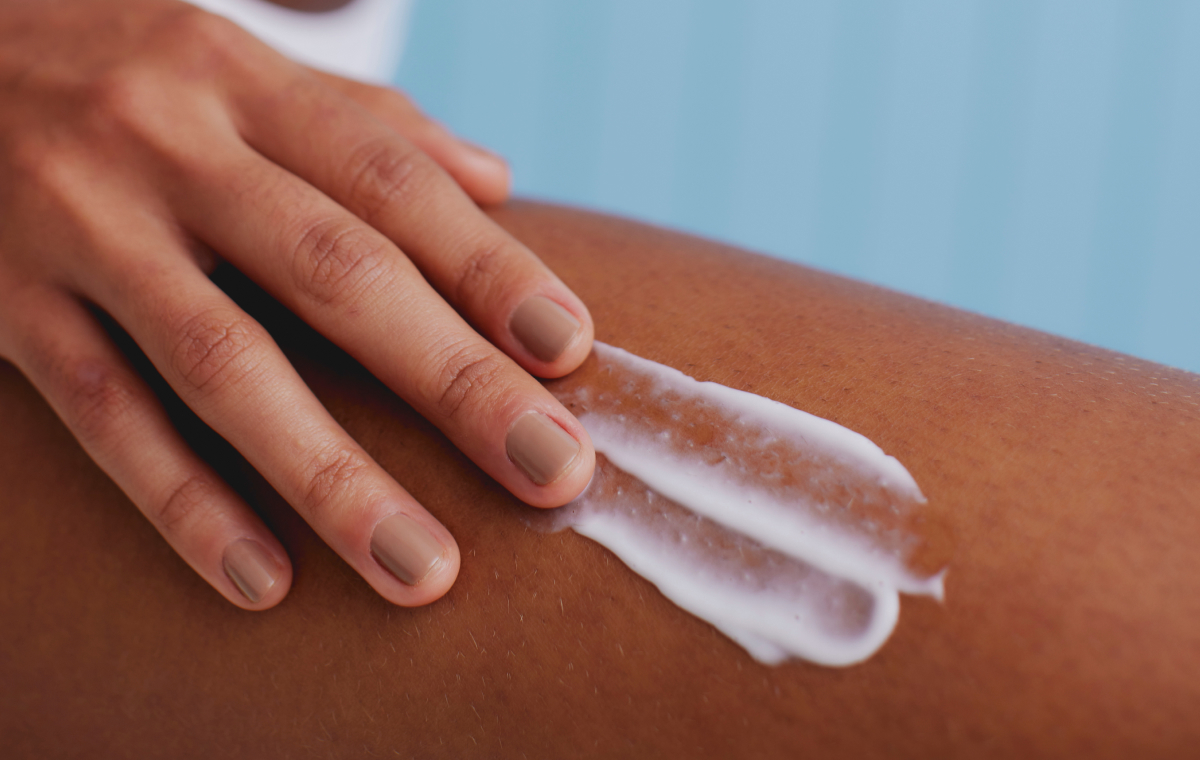
It happens to the best of us. Even if you’re completely devoted to your skincare routine, sometimes dry, itchy legs can catch you off guard.
In fact, it’s one of the most common places dryness shows up—announcing itself with flaking, itching, and rough patches. The first step in combating dry skin, whatever the season? Consistent hydration.
But if you’re already a body-lotion loyalist, you might want to take a look at what other parts of your daily routine could be counteracting your hard work. Let’s explore why your legs might feel dry and itchy—and what you can do to feel more comfortable in your skin.
Table of Contents
- 1 1. You’re showering with water that’s too hot
- 2 2. You’re using products that irritate your skin
- 3 3. Your moisturizer might not be right for your skin
- 4 4. Your shaving technique may need a refresh
- 5 5. You might not be drinking enough water
- 6 6. You’re due a visit with your dermatologist
- 7 7. Your skin is simply changing with age
1. You’re showering with water that’s too hot
As tempting as a hot shower or bath might be, high water temperatures can strip your skin of its natural oils, leaving it dry, tight, and itchy. This is one (very common) reason why your legs may feel itchy after a shower.
What you can do: Opt for short, warm (not hot) showers. Once you’re done, gently pat your legs and the rest of your body dry with the towel—it’s kinder to your skin than rubbing.
2. You’re using products that irritate your skin
If your skin tends to be dry or sensitive at times, using certain body washes can make things worse. Some soaps can be harsh on the skin, disturbing its natural pH balance, and drying it out.
Why is the pH of your skin important? Its natural level is mildly acidic, usually between 4-5.5. This acidic pH influences your skin’s natural barrier function, and any disruptions to its comfort zone can end in dryness or irritation.
Pro tip: To see if your shower gel or body wash is the culprit, switch it up! Look for formulas labeled pH-balanced, fragrance-free, or for sensitive skin. These will better support your skin’s natural state.
3. Your moisturizer might not be right for your skin
Not all body lotions are created equal. If your current pick isn’t keeping your legs feeling smooth and comfortable, your skin might be telling you it’s time for a switch.
Look for a nourishing lotion with ingredients like:
- Urea, which helps retain water and promote optimal moisture levels
- Emollients like dimethicone or glycerin, which smooth and protect the skin barrier
- Dexpanthenol to help hydrate and relieve itching
Choosing the right lotion for dry, itchy skin can make all the difference—especially when it comes to legs, which tend to dry out more quickly.
What you can do: After your bath or shower, apply a good moisturizer while your skin is still slightly damp. Choose a fast-absorbing formula to avoid a greasy or sticky feeling after you’ve gotten dressed.
4. Your shaving technique may need a refresh
If you shave your legs, it could be one reason behind the discomfort. You might be shaving too frequently, the wrong way, or too quickly – leading to razor burn, AKA itchy, red, inflamed skin.
Here are some simple tips:
- Always use shaving cream or gel
- Shave in the direction of hair growth
- Use warm (not hot) water
- Replace your razor blade regularly
- Moisturize after shaving to soothe the skin
5. You might not be drinking enough water
The top layer of your skin is made up of around 30% water—contributing to its plumpness, elasticity, and resilience. If you’re not drinking enough, then your skin might lack hydration too.

Pro tip: Keep a water bottle nearby throughout the day and aim for the recommended daily intake. Hydration apps or reminders can help you stay on track—for your skin, body, and mind.
6. You’re due a visit with your dermatologist
Sometimes, persistent dry itchy skin may be a sign of an underlying condition like eczema, psoriasis, or others. If your symptoms don’t improve with home care, or your legs stay itchy for weeks, it’s worth speaking to your dermatologist or primary care doctor.
What you can do: Keep track of symptoms like redness, swelling, or patches that don’t go away. A skin expert can help identify the cause and recommend the best treatment plan.
7. Your skin is simply changing with age
As your skin ages, it gets drier more easily—becoming thinner and more fragile. The skin’s natural barrier function also weakens as the years go by, resulting in a tendency towards dryness and flaking.
What you can do: Embrace it! Healthy skin is beautiful skin, no matter your years. Care for it from head to toe with a routine that suits your needs and honor its story—because it’s uniquely yours.

Sources and references:
Surber, C., Abels, C., Maibach, H. (eds): pH of the Skin: Issues and Challenges. In Current Problems in Dermatology. Basel, Karger, 2018, vol 54, pp 1-10.
Popkin, B., D’Anci, K., Rosenberg, I. Water, Hydration and Health. In Nutrition Reviews (2010), Volume 68, Issue 8, Pages 439–458.
https://www.nursingtimes.net/clinical-archive/maintaining-skin-health-in-older-people-29-11-2012/
https://www.nap.edu/webcast/webcast_detail.php?webcast_id=261
Behind the blog:
Article written and reviewed by:

Our namesake embodies the spirit of embracing life and all its wonder. As wellness journalists, we explore topics that invigorate the senses and keep curiosity alive. We believe that glowing skin is the result of a healthy body and mind. Weaving beauty with science, we aim to inspire you to live young at every age.

I agree with all you said. Consulting experts is crucial to understanding our skin needs.