

Melanoma can feel like a big, and sometimes overwhelming, topic. But understanding the basics of skin cancer awareness can help you feel more informed, empowered, and proactive about your skin health.
According to the American Cancer Society, more than 100,000 new melanomas are expected to be diagnosed in the US this year. At the same time, experts agree that early detection and consistent sun protection can play an important role in helping reduce risk and support better outcomes.
At ISDIN, we believe healthy skin habits start with education and everyday prevention. That’s why we partnered with world-renowned dermatologist Dr. Susana Puig to share expert-backed guidance on melanoma, skin checks, and sun protection—because understanding your skin is one of the best ways to care for it.
Meet the experts

Dr. Susana Puig
Head of Dermatology at Hospital Clínic in Barcelona and Academic Director of the International School of Derma (ISD).
Table of Contents
What is melanoma?
Melanoma is a type of skin cancer that begins in the melanocytes—the skin cells responsible for producing pigment and giving skin its color. When these cells begin growing uncontrollably, melanoma can develop.
Although melanoma is less common than some other forms of skin cancer, it is considered one of the most serious because it can spread to other parts of the body if not detected early.
That’s why awareness, regular skin exams, and early conversations with a dermatologist are so important.
Types of melanoma
There are several different types of melanoma, and they can appear differently depending on skin tone, genetics, and where they develop on the body.
The main types of melanoma include:
- Superficial spreading melanoma: the most common type, often appearing as a changing flat or slightly raised mole.
- Nodular melanoma: a faster-growing type that may appear as a dark bump or raised lesion.
- Lentigo maligna melanoma: a more slowly-growing lesion that’s more commonly found on the face in older adults.
- Acral lentiginous melanoma: typically diagnosed in people with deeper skin tones and often found on the palms, soles of the feet, or under nails.
Because melanoma can vary so much in appearance, dermatologists often recommend becoming familiar with your skin’s natural patterns and watching for anything new, changing, or unusual.
What does melanoma look like?
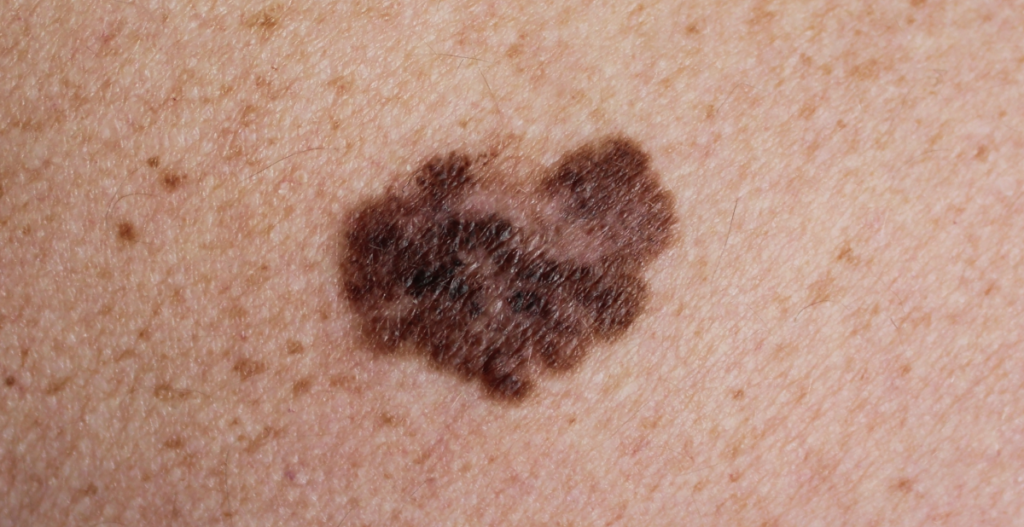
Dr. Puig describes melanoma as “a cancer with a thousand faces” because it can appear differently from person to person.
“In general, the first sign of melanoma is a change in a mole’s size, shape, color, or texture,” she explains.
Many melanomas may appear darker than surrounding moles and can include black, brown, blue, or reddish tones. Others may appear pink or skin-colored, which is one reason regular skin checks matter.
Dr. Puig also notes that melanoma can sometimes appear as:
- A spot that continues growing over time
- A pink lesion that doesn’t heal
- A dark streak under a fingernail or toenail
- A mole that looks noticeably different from surrounding moles, often called the “ugly duckling” sign
In Black and brown skin, melanoma is more commonly found on areas that may receive less sun exposure, including the palms of the hands, soles of the feet, and under the nails.
Expert tip:
While medical experts have contributed to this article, your dermatologist is always the best source for personalized guidance. You can also turn to these trusted organizations for the latest information:
American Cancer Society
Skin Cancer Foundation
National Cancer Institute
What causes melanoma?
Experts believe melanoma develops due to a combination of environmental and genetic factors. But the main contributor is exposure to ultraviolet (UV) radiation from the sun or tanning beds.
Repeated unprotected UV exposure can damage skin cells over time, increasing the likelihood of visible skin aging as well as certain types of skin cancer.
That said, enjoying time outdoors is still an important part of a healthy lifestyle. The goal isn’t to avoid the sun completely—it’s to practice healthier sun habits consistently and thoughtfully.
Who’s at risk?
Anyone can develop melanoma, regardless of age or skin tone. However, certain melanoma risk factors may increase the likelihood of developing it.
Your risk may be higher if you:
- Have fair skin, light eyes, or light hair
- Experienced frequent sunburns, especially during childhood
- Spend significant time outdoors without protection
- Use or previously used tanning beds
- Have many moles or atypical moles
- Have a personal or family history of skin cancer
- Are over age 50
- Have a weakened immune system
Dr. Puig emphasizes that daily sun protection remains one of the most important preventive habits. “Protecting yourself from the sun daily is the best strategy to help prevent visible signs of skin aging, actinic keratoses, and melanoma and other skin cancers,” she explains.
How can you help protect yourself?
According to Dr. Puig, there are three key habits that support long-term skin health: daily sun protection, regular self-checks, and yearly dermatologist visits.
Step 1: Practice smarter sun protection habits

While not every melanoma can be prevented, healthy sun habits can help reduce unnecessary UV exposure. Dr. Puig recommends:
- Limiting prolonged sun exposure during peak UV hours
- Avoiding sunburn whenever possible
- Wearing hats, sunglasses, and protective clothing
- Seeking shade during extended outdoor time
- Applying broad spectrum sunscreen daily on exposed skin
She also recommends choosing a sunscreen you genuinely enjoy wearing. Lightweight, wearable textures can make daily protection easier to maintain consistently throughout the year. When using sunscreen, remember to:
- Apply generously about 15 minutes before sun exposure
- Reapply at least every 2 hours during prolonged outdoor activity
- Reapply after swimming or excessive sweating
- Pay attention to commonly missed areas like the ears, scalp, neck, tops of feet, and around the eyes
Expert tip: “We should apply a sufficient amount of product and distribute it correctly,” says Dr. Puig. Consistency matters just as much as SPF level when it comes to daily sun protection habits.
Step 2: Learn the ABCDE rule for melanoma
While self-checks can’t diagnose melanoma or replace your yearly visit to the dermatologist, they can help you take your health into your own hands.
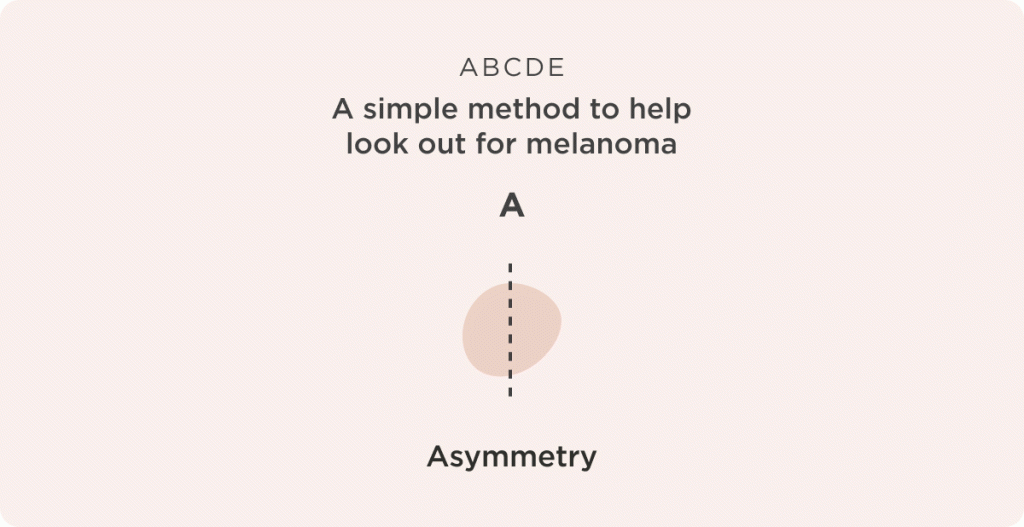
Where to start? Dr. Puig recommends the the ABCDE rule for melanoma, which highlights warning signs that may be worth discussing with a dermatologist.
ABCDE rule melanoma checklist
- A for Asymmetry: One half of the mole doesn’t match the other.
- B for Border: The edges appear irregular, blurred, or uneven.
- C for Color: Multiple colors or uneven pigment may be present.
- D for Diameter: The spot appears larger or continues growing over time.
- E for Evolution: The mole changes in shape, color, size, or sensation.
Other possible warning signs include:
- A sore that doesn’t heal
- Redness or swelling around a mole
- Itching, tenderness, or discomfort
- Bleeding, crusting, or surface changes
- A mole that looks noticeably different from others nearby
Dr. Puig recommends becoming familiar with your skin over time rather than trying to memorize every mole. If something appears new, changing, or unusual, schedule a visit with a professional.
Expert tip: As you track the changes in your skin, take pictures on your cell phone and keep notes. That way, you’ll be better prepared to discuss any concerns with your dermatologist when your appointment comes around.
Step 3: Schedule regular skin exams with a dermatologist
An annual skin check can be an important part of a proactive skincare routine—especially for people with higher melanoma risk factors.
“Those with many moles or a personal or family history of skin cancer should have a yearly dermatological exam using dermoscopy,” says Dr. Puig.
What is dermoscopy in skin cancer screenings?
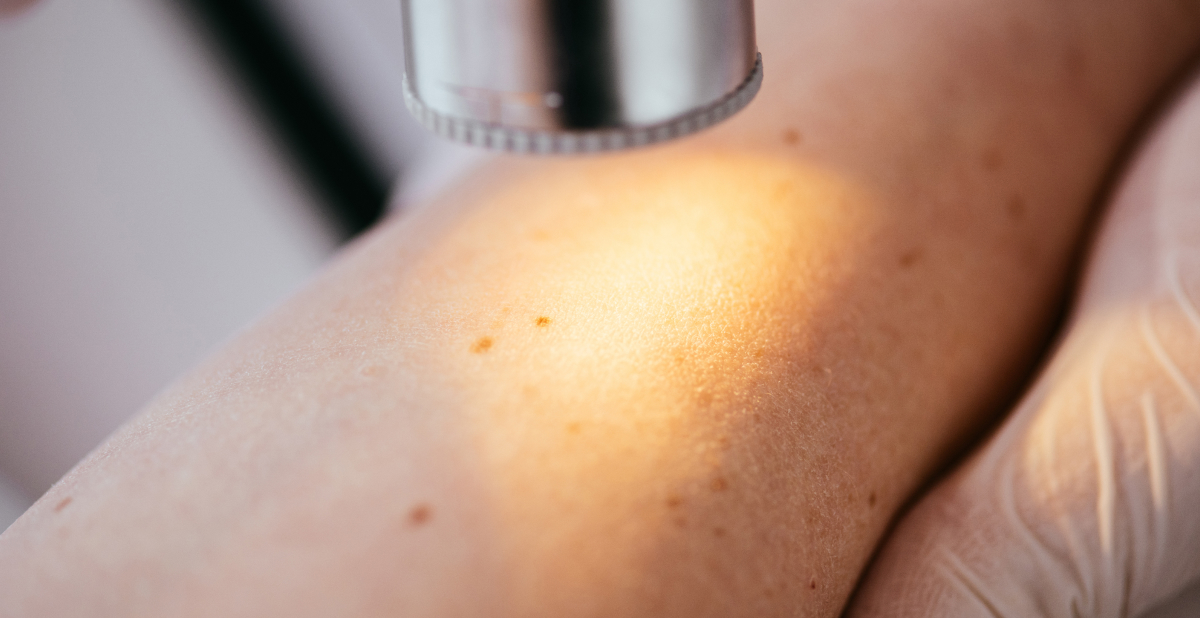
Dermoscopy is a gentle, non-invasive technique dermatologists use to examine the skin more closely. During a skin exam, a handheld device called a dermoscope allows dermatologists to view structures beneath the skin’s surface that may not be visible to the naked eye.
Digital dermoscopy can also help dermatologists monitor moles over time and compare changes more accurately.
According to Dr. Puig, “Dermoscopy allows us to see parts of the skin’s structure that aren’t visible to the naked eye. With this, we can improve diagnostic accuracy.”
Because melanoma can occasionally appear in less visible areas, dermatologists often perform full-body skin exams that include the scalp, nails, hands, feet, and back.
Expert tip: Make sure to mention any concerns or skin changes during your appointment with the dermatologist, and bring a friend if you want a little extra help advocating for your health.
More Screen Time: Closing the gap in skin protection

When it comes to skin health, awareness is only the first step—daily habits matter, too.
As part of ISDIN’s More Screen Time campaign, we partnered with Talker Research to better understand how Americans approach sun protection and skin health. The results revealed a significant gap between awareness and action.
According to the survey:
- 78% of Americans say skin health is important to them
- Fewer than 25% report wearing sunscreen daily
- 40% have never had a professional skin screening
- On average, Americans wear sunscreen only 31% of the year
One of the biggest barriers? Texture. Many people say they skip sunscreen because they dislike how it feels on their skin.
That’s why wearable, lightweight broad spectrum sunscreens can make such a meaningful difference in building consistent habits. The best sunscreen is often the one you genuinely want to apply every day.
At ISDIN, we believe more sunscreen and more skin screenings can help support healthier habits, and healthier skin, for the long term.
Caring for your skin’s future, today

Conversations about melanoma can feel serious, but they can also be empowering. Learning how to recognize changes in your skin, practicing healthy sun habits, and scheduling regular skin exams are meaningful ways to support your skin health over time.
Dr. Puig puts it simply: “These steps, simple but fundamental, help support prevention and early detection.”
Moving forward, do your best to:
- Wear broad spectrum SPF daily
- Reapply during prolonged sun exposure
- Check your skin regularly
- Schedule yearly dermatologist visits
- Encourage loved ones to do the same
Because caring for your skin isn’t just about today—it’s about helping protect your future, one healthy habit at a time.
Behind the blog:
Article written and reviewed by:

Our namesake embodies the spirit of embracing life and all its wonder. As wellness journalists, we explore topics that invigorate the senses and keep curiosity alive. We believe that glowing skin is the result of a healthy body and mind. Weaving beauty with science, we aim to inspire you to live young at every age.

I didn’t know that melanoma is the most aggressive kind of skin cancer. My sister recently found out that she might have melanoma, so my family and I are trying to learn more about it and raise awareness about it. I think that it would be smart to make sure that we are taking care of our skin and I think it might also be smart to get some melanoma awareness pins to help start conversations about it and help show our support. Thanks for detailing what melanoma is and how to detect it.